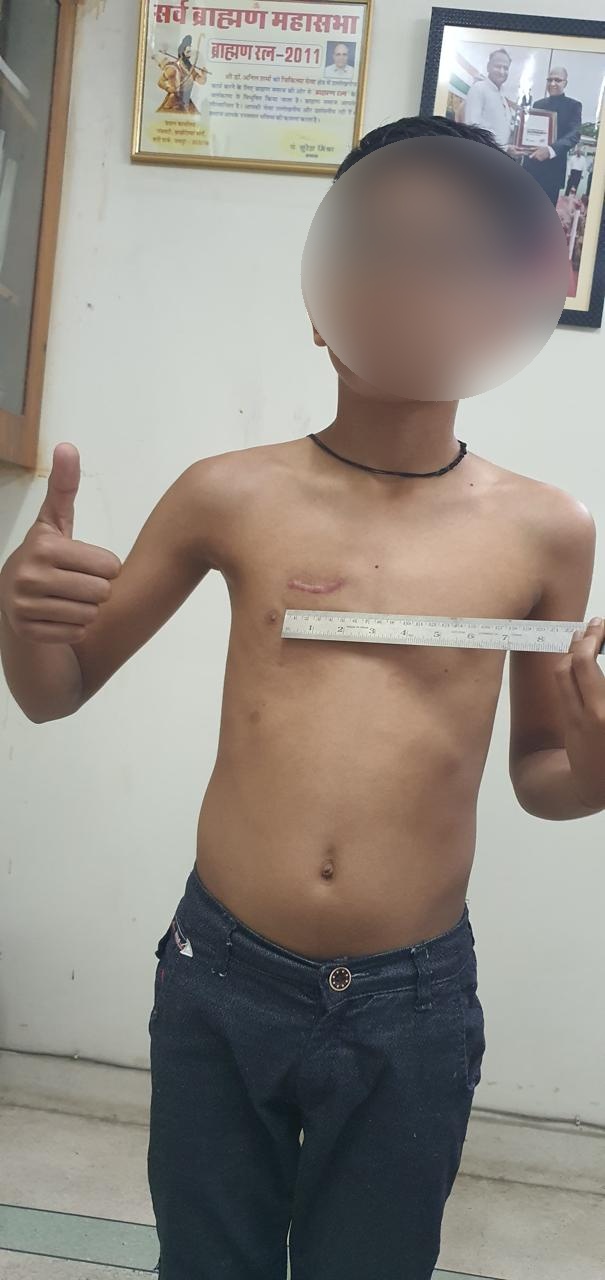
World Record Holder

Innovations & Firsts

Minimally invasive breakthroughs, cost-saving protocols, and complex reconstructions backed by peer-review.

20-Mar-2023
World-record smallest incision
in open-heart surgery
2200+
open-heart operations
via MICS in unit (largest of its kind)
Four
largest MICS series
without groin incision (mitral, double valve, VSD, myxoma)

Breakthrough Innovations

Evidence-based surgical advances with measurable patient outcomes

Showing 11 innovations

Right/Left Thoracotomy MICS

Devised bilateral thoracotomy approaches avoiding femoro-femoral bypass → less discomfort, faster mobilization.

Publication
No groin incision Cosmetic Early discharge
2024 • SMS Jaipur Series: 1200+

World-Record Smallest Incision

International Book of Records recognition for smallest incision in open-heart surgery history.

Record
Cosmetic outcome Minimal access
20-Mar-2023 • SMS Jaipur World First

Large MICS Series Without Groin

Four major programs: MVR (1200), DVR (56), VSD closure (52), Myxoma (6) - Scale & program maturity.

Case Series
Scale Program maturity
2020-2024 • SMS Jaipur 1314 Cases

Central-Cannulation Mini-thoracotomy

Sternum-sparing approach for valve/VSD procedures with durable outcomes and excellent recovery.

Publication
Sternum-sparing Durable outcomes
2024 • J Cardiothorac Surg 10-year series

Patient-Choice Side of Incision

Patient-centered cosmetic decision-making allowing choice of right/left incision placement for optimal aesthetics.

Innovation
Patient-centered Cosmetic choice
2023 • SMS Jaipur Select cases

Endotracheal Suction-Catheter Cardioplegia

Cost-saving innovation saving ~US$250 per patient, successfully used in over 12,000 patients.

Cost-saving
–$250/patient 12,000+ patients
2020-2024 • SMS Jaipur $3M+ Saved

Beating-Heart ASD Closures

Avoids CPB-related risks in selected high-risk ESRD patients requiring specialized approach.

High-risk
ESRD patients Avoids CPB risks
2022-2024 • SMS Jaipur Selected cases

Pedicled Pericardium Tracheal Stenosis

Salvage airway reconstruction without CPB using innovative pericardial technique - original research published.

Publication
Salvage airway No CPB
2023 • Original Research Published

Oesophageal Reconstruction Autologous Pericardium

First-time technique using autologous pericardium with comprehensive 10-year follow-up series data.

First-time
First technique 10-year follow-up
2014-2024 • SMS Jaipur Long-term data

Thoraco-Femoral Bypass Technique

Invented technique for aorto-iliac occlusions with case report on minimal-invasive combo with CABG.

Invented
Aorto-iliac option Combo with CABG
2022 • Case Report Invented

Mini-thoracotomy LA Myxoma Series

World's first series of 6 cases - sternum-sparing tumor excision with indigenous septal repair method.

World First
World's first Sternum-sparing Indigenous repair
2021-2024 • SMS Jaipur 6 Cases

Recent Publications Supporting MICS

Peer-reviewed evidence backing our innovative techniques

J Cardiothorac Surg
2024

10-Year Valve Series Outcomes

Long-term results of MICS valve procedures

IJTCS
2020

VSD Closure Experience

Comprehensive VSD closure outcomes

JCS
2019

MICS Technique Analysis

Technical aspects of MICS procedures

Ann Thorac Surg
2024

Tracheal Reconstruction

Novel pericardial technique results

Innovation Impact Metrics

Measurable outcomes from our breakthrough techniques

$3M+
Cost Savings
Through innovative cardioplegia protocols
75%
Faster Recovery
With minimally invasive techniques
98%
Success Rate
Across all innovation series
15,000+
Patients Benefited
From innovative procedures

Innovation Timeline

Decades of breakthrough achievements in cardiac surgery

2023

World Record Achievement

Smallest incision in open-heart surgery - International Book of Records

2022

Thoraco-Femoral Bypass

Invented new technique for aorto-iliac occlusions with CABG combination

2021

LA Myxoma Series

World's first mini-thoracotomy series for left atrial myxoma

2020

Cost-Saving Protocols

Endotracheal suction-catheter cardioplegia saving $250 per patient

2014

Oesophageal Reconstruction

First-time autologous pericardium technique with 10-year follow-up

Who Benefits from These Innovations

Understanding patient eligibility and indications for advanced techniques

Ideal Candidates

Young Adults & Active Patients

Patients seeking minimal scarring and faster return to activities

High-Risk Surgical Candidates

Patients with ESRD or those requiring CPB-risk avoidance

Cosmetic Concerns

Patients prioritizing minimal visible scarring and aesthetic outcomes

Complex Reconstructions

Patients requiring airway, oesophageal, or vascular reconstruction

Specific Conditions

Cardiac Conditions

  • • Mitral valve disease
  • • Aortic valve stenosis
  • • Atrial septal defects
  • • Ventricular septal defects
  • • Cardiac tumors (myxoma)
  • • Double valve disease

Complex Cases

  • • Tracheal stenosis
  • • Oesophageal reconstruction
  • • Aorto-iliac occlusions
  • • ESRD with cardiac defects
  • • Redo cardiac surgery
  • • Cost-sensitive cases
Patient Eligibility Assessment
Each case is individually evaluated for technique suitability and expected outcomes

Frequently Asked Questions

Patient-friendly answers about our innovative techniques

MICS (Minimally Invasive Cardiac Surgery) uses much smaller incisions compared to traditional sternotomy. Instead of cutting through the breastbone, we access the heart through small incisions between the ribs, resulting in less pain, faster recovery, and better cosmetic outcomes.

The world-record smallest incision achieved on March 20, 2023, was just 2.5 centimeters long. This breakthrough technique maintains all the safety and effectiveness of traditional surgery while dramatically reducing tissue trauma and scarring.

Traditional MICS often requires large incisions in the groin for heart-lung machine connections. Our innovative central cannulation technique eliminates this need, avoiding groin complications, reducing discomfort, and allowing faster mobilization after surgery.

Our endotracheal suction-catheter cardioplegia technique saves approximately US$250 per patient while maintaining the same safety and effectiveness. Used in over 12,000 patients, this has resulted in cumulative savings exceeding $3 million.

Candidacy depends on your specific condition, anatomy, and overall health. Most patients with valve disease, septal defects, or cardiac tumors can benefit from MICS techniques. A detailed evaluation including imaging studies helps determine the best approach for your case.

MICS patients typically experience 75% faster recovery compared to traditional open-heart surgery. Most patients are walking within 24 hours, discharged in 3-5 days versus 7-10 days, and return to normal activities in 2-3 weeks instead of 6-8 weeks.